Call for Master and Undergraduates Students: Join My Bioinformatics Research Group!
I am currently seeking motivated and dedicated Master’s students (research track preferred) and undergraduates in Biomedical Sciences to join my bioinformatics research projects. Due to the intensive nature of the work, I cannot accept students with less than three semesters remaining (example: if you plan to graduate in Fall 2026, you need to join my group at least in Fall 2025). All projects are open to both Master and Undergraduate students.
1. Development of AI-based Multi-Ancestry Profile Using Multi-Omics Dataset for Autoimmune Diseases of 25,000 Qatar population
Autoimmune disorders affect approximately 4–5% of the global population, with increasing prevalence in the Middle East. However, large-scale multi-omics studies remain biased toward European populations, limiting our understanding of population-specific immune mechanisms. The Qatari population, shaped by historical migration patterns and traditional consanguineous marriages, offers a unique genetic architecture for uncovering novel insights into immune system regulation. This parent project generates and integrates genomic, proteomic, and metabolomic data from 25,000 Qatari individuals through the Qatar Precision Health Initiative (QPHI). The work is organized into 11 interconnected mini-projects, each supervised over 3 semesters by graduate students and postdoctoral researchers. Together, these projects aim to build a comprehensive multi-ancestry immune atlas, develop Qatari-specific risk prediction tools, and establish translational resources for precision medicine.
Mini-Project 1: Ancestry-Specific Genetic Variation in the Qatari Population Using Whole-Genome Sequencing Data
This project characterizes the population structure and identifies ancestry-specific variants in 25,000 Qatari whole genomes. Using quality-controlled whole-genome sequencing data, principal component analysis (PCA), and admixture modeling (K=2–10), we define ancestry clusters and identify ancestry-informative markers (AIMs) for comparison with global reference panels such as the 1000 Genomes Project. Structural variants and runs of homozygosity are analyzed to assess the effects of consanguinity on the Qatari genetic landscape. The resulting ancestry classifications serve as a foundational layer for all downstream mini-projects across the QPHI 25K program.
Research Gap: Existing genetic studies on autoimmune diseases are predominantly biased toward European populations, with limited understanding of Middle Eastern genetic architecture, including the Qatari population’s unique consanguinity and historical migration patterns. This limits the accuracy of ancestry-informed models for immune-related traits in the region.
Aim(s): Characterize population structure and identify ancestry-specific genetic variants in 25,000 Qatari genomes.
Objectives:
Perform quality control and relatedness analysis on the whole-genome sequencing data.
Conduct principal component analysis (PCA) and admixture modeling to define ancestry clusters.
Identify ancestry-informative markers and compare with global reference panels.
Expected Output: A comprehensive dataset of ancestry clusters with 500–1,000 ancestry-informative markers (FST >0.1), visualized in PCA plots and admixture bar plots.
Impact and Significance to Qatar: This project establishes the first large-scale ancestry-specific genomic baseline for the Qatari population, enabling stratified multi-omics integration across all subsequent projects. The ancestry classifications directly support Qatar’s precision medicine initiatives by ensuring that genetic analyses and clinical tools account for the population’s unique diversity, improving the relevance and accuracy of genomic medicine for Qatari citizens.
Mini-Project 2: Development and Validation of Polygenic Risk Scores for Immune-Related Traits in the Qatari Population
This project conducts genome-wide association studies (GWAS) on continuous immune-related traits such as C-reactive protein (CRP) and erythrocyte sedimentation rate (ESR), then constructs and validates polygenic risk scores (PRS) using Qatari-specific summary statistics. PRS are built with PRSice-2 and refined using LDpred2 with ancestry-specific linkage disequilibrium panels derived from phased Qatari haplotypes. Performance is evaluated via AUROC and calibration metrics, stratified across ancestry groups. The goal is to develop PRS models that outperform external European-derived scores by incorporating local genetic architecture.
Research Gap: Polygenic risk scores for autoimmune-related traits are primarily derived from European cohorts, leading to reduced predictive accuracy in non-European populations such as Qataris, where genetic diversity and consanguinity may alter risk distributions and linkage disequilibrium patterns.
Aim(s): Conduct GWAS on continuous immune-related traits and develop a Qatari-specific PRS. Validate and refine the PRS across ancestry groups and phenotypic outcomes.
Objectives:
Perform GWAS on continuous phenotypes (e.g., CRP, ESR levels) to generate summary statistics.
Construct PRS from GWAS results and validate against held-out samples.
Refine PRS using ancestry-specific LD panels and evaluate improvements in predictive performance.
Expected Output: A Qatari-specific PRS model for immune inflammation with AUROC >0.65, including a stratified risk distribution plot across Qatari ancestries and a ranked list of top-weighted variants.
Impact and Significance to Qatar: This project delivers population-specific risk prediction tools that can be integrated into Qatar’s national precision health programs. By optimizing PRS for the Qatari genetic background, the project directly improves the ability to identify individuals at elevated risk for autoimmune and inflammatory diseases, enabling earlier screening and targeted interventions tailored to the Qatari population.
Mini-Project 3: Pharmacogenomics Annotation of Immune-Related Variants in Qatari Genomes
This project performs comprehensive pharmacogenomics annotation on 25,000 Qatari genomes, focusing on genes relevant to autoimmune therapies such as immunosuppressants and biologics. Using ANNOVAR with PharmGKB and CPIC databases, we annotate star alleles, CYP2D6, CYP2B6, HLA variants, and copy number variations. Allele frequencies are calculated stratified by ancestry, and pharmacogenomic variants are associated with drug response phenotypes extracted from electronic medical records. The output is a population-specific pharmacogenomic variant database for immune-related genes.
Research Gap: Pharmacogenomics studies for autoimmune treatments lack representation from Middle Eastern populations, potentially leading to suboptimal drug responses in Qataris due to uncharacterized star alleles and structural variants in key drug metabolism genes.
Aim(s): Annotate and analyze pharmacogenomic variants relevant to autoimmune therapies in 25,000 Qatari genomes.
Objectives:
Perform pharmacogenomic annotation on variant files using ANNOVAR with PharmGKB and CPIC databases.
Assess allele frequencies stratified by ancestry and associate with phenotypic drug response data.
Identify population-specific variants in key pharmacogenes including CYP2D6, CYP2B6, and HLA.
Expected Output: A pharmacogenomic variant database covering 20–30 immune-related genes, including ancestry-stratified frequency tables and association results (p<0.05) for at least 5 variants linked to drug metabolism.
Impact and Significance to Qatar: This project supports the implementation of pharmacogenomics-guided prescribing in Qatar’s healthcare system. By characterizing the unique pharmacogenomic landscape of the Qatari population, the findings will help clinicians optimize drug selection and dosing for autoimmune therapies, reducing adverse drug reactions and improving treatment outcomes for Qatari patients.
Mini-Project 4: Proteomic Profiling of Immune-Related Proteins in Qatari Ancestry Groups
Using 3,000 Qatari samples with proteomic data, this project establishes ancestry-specific reference ranges for immune-related proteins. After quality control, log2 transformation, quantile normalization, and batch correction using ComBat, differential abundance analysis is performed across ancestry clusters defined by genomic PCA. Immune protein profiles are correlated with phenotypic inflammation markers, and reference ranges are defined following CLSI guidelines. The results contribute key proteomic baselines to the Qatari immune molecular atlas.
Research Gap: Proteomic baselines for immune function are underrepresented in Middle Eastern populations, hindering the identification of ancestry-specific protein expression variations that could explain differential autoimmune disease susceptibility in the region.
Aim(s): Establish ancestry-specific proteomic reference ranges for immune proteins using 3,000 Qatari samples.
Objectives:
Conduct quality control and differential abundance analysis on proteomic data.
Stratify proteomic profiles by ancestry and correlate with immune phenotypes.
Define reference ranges for key immune proteins following clinical laboratory standards.
Expected Output: Ancestry-specific reference ranges for 50–100 immune proteins with means, standard deviations, and 95% confidence intervals, plus enrichment plots for dysregulated pathways (FDR<0.05).
Impact and Significance to Qatar: This project provides the first population-specific proteomic reference ranges for immune proteins in Qatar. These baselines are essential for accurate clinical interpretation of laboratory results in Qatari patients, directly supporting Qatar’s healthcare infrastructure and enabling more precise monitoring and diagnosis of immune-mediated conditions.
Mini-Project 5: Metabolomic Analysis of Immune-Metabolic Pathways in Autoimmune-Prone Qatari Individuals
This project identifies ancestry-specific metabolomic patterns related to immune function using 3,000 Qatari samples. Metabolite set enrichment analysis (MSEA) and pathway analysis using KEGG focus on immune-metabolic interactions, including lipid metabolism and tryptophan pathways. Metabolite profiles are stratified by ancestry and associated with autoimmune phenotypes such as autoantibody levels using linear models adjusted for covariates. The output includes enriched metabolic pathways with ancestry-specific metabolite levels, visualized as network graphs and correlation heatmaps.
Research Gap: Metabolomic studies linking metabolism to autoimmunity are scarce in non-European populations, missing opportunities to identify Qatari-specific metabolic alterations that interact with genetic factors in diseases like systemic lupus erythematosus (SLE) or multiple sclerosis (MS).
Aim(s): Identify ancestry-specific metabolomic patterns related to immune function in 3,000 Qatari samples.
Objectives:
Perform quality control and pathway analysis on metabolomic data.
Integrate metabolomic data with phenotypic information to find associations with autoimmune markers.
Map enriched immune-metabolic pathways to ancestry groups.
Expected Output: A catalogue of 10–20 enriched metabolic pathways (p<0.05) with ancestry-specific metabolite levels, visualized in network graphs and correlation heatmaps.
Impact and Significance to Qatar: This project uncovers metabolic signatures that may serve as early biomarkers for autoimmune diseases in Qatari subpopulations. The findings inform both clinical screening strategies and nutritional or lifestyle interventions, contributing to Qatar’s vision of preventive and personalized healthcare tailored to the metabolic characteristics of its diverse population.
Mini-Project 6: Machine Learning-Based Integration of Genomics and Proteomics for Autoimmune Risk Prediction in Qataris
This project develops machine learning models that integrate genomic variants and proteomic data for autoimmune risk prediction. Using the overlapping subset of approximately 3,000 samples with both genomics and proteomics, features are engineered via PCA-reduced genetic variants and protein abundances. XGBoost models are trained with nested cross-validation, interpreted using SHAP values, and hyperparameter-tuned with Optuna. The hypothesis is that multi-omics integration will outperform genomics-only models by at least 15% in predicting autoimmune phenotypes.
Research Gap: AI-based integration of genomics and proteomics for autoimmune risk prediction is underexplored in diverse populations, limiting the discovery of novel, population-specific biomarkers beyond traditional polygenic risk scores.
Aim(s): Develop a machine learning model for autoimmune risk prediction using integrated genomic and proteomic data from the Qatari population.
Objectives:
Engineer features from genomic and proteomic datasets for model input.
Train and validate ML models on phenotypic autoimmune outcomes.
Interpret model features using SHAP analysis for biological insights.
Expected Output: An ML model with AUROC >0.70 for autoimmune risk, including SHAP value rankings for the top 20 predictive features and a prototype predictive dashboard.
Impact and Significance to Qatar: This project demonstrates the application of AI to multi-omics data for population-specific disease risk prediction, directly advancing Qatar’s national AI and precision medicine strategies. The resulting models and tools can be translated into clinical decision-support systems for autoimmune disease screening in Qatari healthcare settings.
Mini-Project 7: Admixture Analysis and Inference of Historical Migration Events in the Qatari Population Using Whole-Genome Data
This project infers admixture proportions and the timing of historical gene flow events in the Qatari population by integrating 25,000 modern genomes with ancient DNA reference panels from public datasets, including Neolithic Levantines and Bronze Age Persians. ADMIXTURE modeling (K=3–15) and admixture dating using ALDER/MALDER are applied to identify multiple waves of gene flow from Arabian, Persian, African, and South Asian sources. Runs of homozygosity are incorporated to account for consanguinity, and admixture tracts are associated with immune-related phenotypes to understand how historical migration shaped modern disease susceptibility.
Research Gap: While the Qatari population exhibits complex admixture due to historical migrations from Arabian, Persian, African, and South Asian regions, the detailed timing and sources of these admixture events remain understudied, limiting insights into how ancient ancestries influence modern immune-related genetic variation.
Aim(s): Infer admixture proportions and timing in the Qatari population by comparing to ancient DNA references.
Objectives:
Estimate admixture components using modern and ancient reference panels.
Date admixture events and identify source populations.
Correlate admixture proportions with immune-related phenotypes.
Expected Output: A dated admixture model with ancestry proportions and timelines for specific gene flow events, presented in admixture bar plots and tract length distributions.
Impact and Significance to Qatar: This project provides a detailed genetic history of the Qatari population, revealing how historical migrations shaped the modern genetic landscape. Understanding these admixture patterns is essential for interpreting disease risk across Qatari subpopulations and for designing public health strategies that account for the population’s multi-ancestry composition—directly supporting Qatar National Vision 2030’s human development pillar.
Mini-Project 8: Reconstruction of Demographic History in the Qatari Population Through Ancient DNA Integration
This project models the demographic history of the Qatari population using coalescent-based approaches (PSMC, momi2/dadi) applied to high-coverage Qatari genomes and ancient reference populations from the Arabian Peninsula and the broader Near East. By integrating ancient DNA and accounting for consanguinity through runs of homozygosity, the project reconstructs effective population size changes, bottleneck events, and divergence times. The impact on immune gene diversity is evaluated to connect demographic history to modern autoimmune genetic architecture.
Research Gap: Demographic models for Middle Eastern populations often overlook consanguinity and ancient bottleneck events, with limited integration of ancient DNA to infer effective population size changes that could explain unique autoimmune genetic architectures in Qatar.
Aim(s): Model demographic parameters (effective population size, divergence times) using Qatari genomes and ancient references. Evaluate the impact of demographic events on immune gene diversity.
Objectives:
Infer effective population sizes and divergence times using coalescent methods.
Incorporate ancient DNA samples to refine demographic models.
Link demographic events to immune-related phenotypes and gene diversity.
Expected Output: A demographic model showing effective population size over time, including bottleneck and expansion events, with divergence estimates to ancient Near Eastern groups.
Impact and Significance to Qatar: This project provides critical historical context for understanding why certain genetic diseases and autoimmune conditions are prevalent in the Qatari population. By reconstructing the demographic forces that shaped Qatar’s genetic diversity, the findings inform both genomic medicine and public health policy, helping Qatar understand and address the genetic consequences of its population history.
Mini-Project 9: Fine-Scale Ancestry Inference Using Ancient DNA Proxies for Immune Variant Phasing in Qataris
This project develops fine-scale local ancestry maps across the Qatari genome using ancient DNA as proxy reference populations. Haplotypes are phased with SHAPEIT4, and local ancestry inference is performed with RFMix/ELAI using Iron Age and ancient Levantine/Persian samples. The focus is on phasing immune gene haplotypes to uncover hidden associations with autoimmune traits that are missed when using only modern reference panels. Short tandem repeat data is incorporated for repeat-aware phasing, and phased haplotypes are associated with immune phenotypes through haplotype-based tests.
Research Gap: Standard ancestry inference tools underperform in admixed populations like Qataris, where incorporating ancient DNA could improve local ancestry assignment, particularly for phasing immune variants affected by historical recombination events.
Aim(s): Develop fine-scale ancestry maps for the Qatari genome using ancient DNA proxies.
Objectives:
Assign local ancestry tracts genome-wide using ancient DNA-informed reference panels.
Focus on immune gene regions and phase variants at high resolution.
Correlate phased haplotypes with autoimmune phenotypic outcomes.
Expected Output: Genome-wide ancestry tract maps with detailed phasing for 50 immune loci, including visualizations of tract lengths and phenotype odds ratios for key haplotypes.
Impact and Significance to Qatar: This project delivers high-resolution ancestry maps that improve the accuracy of genetic analyses in Qatar’s admixed population. The phased haplotype data directly enhances PRS refinement and ML-based risk prediction, enabling more precise identification of disease-associated variants in Qatari patients and strengthening the foundation for population-specific clinical genomics.
Mini-Project 10: Detection of Positive Selection Signals in Immune-Related Genes Among Qatari Ancestries Compared to Ancient Populations
This project scans for signals of natural selection in immune-related genes using integrated haplotype scores (iHS) and cross-population extended haplotype homozygosity (XP-EHH), stratified by ancestry clusters. Selection signals in modern Qatari genomes are compared against ancient DNA datasets from the Near East, including Mesolithic and Bronze Age samples, to identify region-specific immune adaptations driven by historical environmental pressures such as infectious diseases. Top candidate genes are associated with autoimmune phenotypes through gene set enrichment and association analyses.
Research Gap: Signals of natural selection in immune genes are well-documented in European and African populations but remain scant in Middle Eastern groups like Qataris, where comparisons to ancient DNA could reveal region-specific adaptations to disease pressures absent in modern global studies.
Aim(s): Identify and validate selection signals in immune-related loci using modern Qatari data and ancient reference populations.
Objectives:
Scan for selection signatures across the genome using haplotype-based statistics.
Compare selection signals in immune genes between modern Qataris and ancient DNA datasets.
Assess associations between top selection signals and autoimmune phenotypes.
Expected Output: A list of 10–20 candidate immune genes under recent positive selection (e.g., HLA loci with iHS >2.5), including Manhattan plots and comparative analyses showing elevated selection signals in Qataris versus ancient populations.
Impact and Significance to Qatar: This project reveals how evolutionary pressures have shaped the immune gene landscape of the Qatari population, explaining why certain autoimmune conditions may be more or less prevalent. These insights inform both basic understanding of disease biology in Qatar and the development of population-aware screening and therapeutic strategies for immune-mediated diseases.
Mini-Project 11: Unsupervised Multi-Omics Integration Using MOFA+ for Ancestry-Specific Immune Patterns in Qataris
This project applies Multi-Omics Factor Analysis (MOFA+) to integrate genomic, proteomic, and metabolomic data from approximately 3,000 overlapping Qatari samples. The unsupervised approach identifies latent factors that capture coordinated molecular variation across omics layers. Factors are interpreted through pathway enrichment using MSigDB and KEGG immune pathways and associated with autoimmune phenotypes including inflammation markers and autoantibody levels. The goal is to discover latent factors explaining more than 20% of cross-omics variance with significant ancestry-specific patterns.
Research Gap: Unsupervised integration of multi-omics data (genomics, proteomics, metabolomics) is underexplored in Middle Eastern populations, limiting the discovery of coordinated molecular patterns that underlie ancestry-specific immune variation and autoimmune susceptibility in Qataris.
Aim(s): Integrate genomic, proteomic, and metabolomic data to identify ancestry-specific immune patterns using unsupervised multi-omics factor analysis.
Objectives:
Preprocess and align multi-omics data for integration across overlapping samples.
Fit MOFA+ models and identify latent factors capturing coordinated cross-omics variance.
Interpret factors through pathway enrichment and phenotype associations.
Expected Output: A set of 10–20 latent factors with omics loadings, visualized as heatmaps and variance decomposition plots, plus enrichment results for immune pathways and phenotype correlations (r>0.2 for key factors).
Impact and Significance to Qatar: This project represents the first large-scale unsupervised multi-omics integration study in a Middle Eastern population, enabling discovery of novel molecular patterns that no single omics layer could reveal alone. The identified biomarker panels and molecular signatures will feed directly into translational tools for Qatar’s precision medicine ecosystem, supporting personalized diagnosis and treatment of autoimmune diseases across the population’s diverse ancestry groups.
Other Active Research Projects
2. Application of whole genome sequencing (WGS) to uncover insights to the relationship between historical migration of Malay population and genetic disease
In our previous study (Razali et al., 2021), we hypothesize that Peninsular Arabia was the launching pad for humanity to venture to other parts of the world after the migration out of Africa. However, the gene flow to the Southeast Asia part of the world was not represented. Like Arabia, the Southeast Asia region is under-represented in genomics. Archaeological evidence showed that modern humans have occupied Southeast Asia for 60kya, far longer than even the settlement in East Asia (estimated 40kya). Current evidence suggests that SEA was occupied by Hòabìnhian hunter-gatherers until the Neolithic period, when farming economies expanded, restricting foraging groups to remote habitats (McColl et al., 2018). It has been previously shown that the ancestors of the modern-day Negritos are the first settlers in the Malay Archipelago and subsequently interbreed with populations coming from the South and East Asian regions (Yew et al., 2018). In recent years, many studies have uncovered genetic data of ancient humans worldwide. This genetic data provides opportunities for researchers to compare them against the modern population.
In our study, we aim to examine the genomic diversity between the different modern Malays populations with ancient genomes and other modern world populations. To achieve this, we plan to do the following (a) To identify the presence/absence of genetic variants of interest between modern and ancient genomes (b)To predict the population structure of the Malay-subgroups (c) To describe the gene flow between different Malay sub-ethnic groups with other modern and ancient ancestries (d)To identify the demographic history of the Malay population through effective population size.
The resulting findings will yield practical benefits for public health and will directly align with the national research strategy and vision. As a result, it will enhance our understanding of pathogenic emergence, disease evolution and disease predisposition across the Southeast Asia region. Our methodology represents an innovative approach that leverages cutting-edge sequencing technologies to explore clinical diagnostic inquiries.
3. Exploring Admixture-Driven Somatic and Germline Mutations in Breast Cancer among the Qatari Population
The aim of this project is to study the somatic mutation signature profile in Qatari populations using genetic ancestry. Such signature profiles in our target dataset could be exploited as novel/early biomarkers and/or prospective treatment targets to manage human cancer patients, including breast cancer.
To achieve this aim, we present 3 objectives. The first is to perform mutational analysis in the tumour and link its status with therapy response in Qatari patients. The second is to assess gene expression in tumor tissue this to create predictor of response to specific therapy. The third is to track the pathogenic genetic variants across different historical periods using ancient DNA from the Middle East and Northern African (MENA) region. We plan to perform whole genome sequencing (WGS) and whole transcriptome sequencing (WTS) of 200 breast cancer patients. For WGS, we will analyze the samples from tumour and match normal tissues. In addition, the match normal tissues will be also used to predict germline mutations. We will use this germline mutations together with other germline resources to identify and cluster our 200 patients into genetic ancestries. This would allow us to treat the 200 patients as heterogenous groups rather than one homogenous cohort. We will then compare between inter and intra ancestry groups and with other world population to identify somatic signature profile.
Additionally, we will study the germline mutation profile of our patient cohort with published ancient DNA from around the MENA region by tracking the presence and/or absence of mutations over thousands of years. This will allow us to identify the evolutionary mechanism that gave rise to the germline mutations associated with breast cancer. In terms of the expected outcome and impact from this study it can be seen from the perspective of the United Nation Sustainable Development Goals (SDGs) such as in promoting health and well-being (SDG 3). By having a somatic mutation profile signature based on genetic ancestry, it can improve therapeutic efficacy while decreasing the toxicity of specific therapies since it will provide insights into unique signature markers at the subpopulation level. This is critical in improving precision medicine initiatives in Qatar since it enables the development of personalized treatment strategies that consider the population’s distinct genetic attributes. Finally, this project will raise awareness of somatic mutations because it is the first large-scale somatic study in Qatar. It has the potential to be an excellent training experience for Qatar University staff and students and will help in producing a new generation of researchers capable of performing complex cancer research thus paving the way for establishing knowledge-economy workers in Qatar.
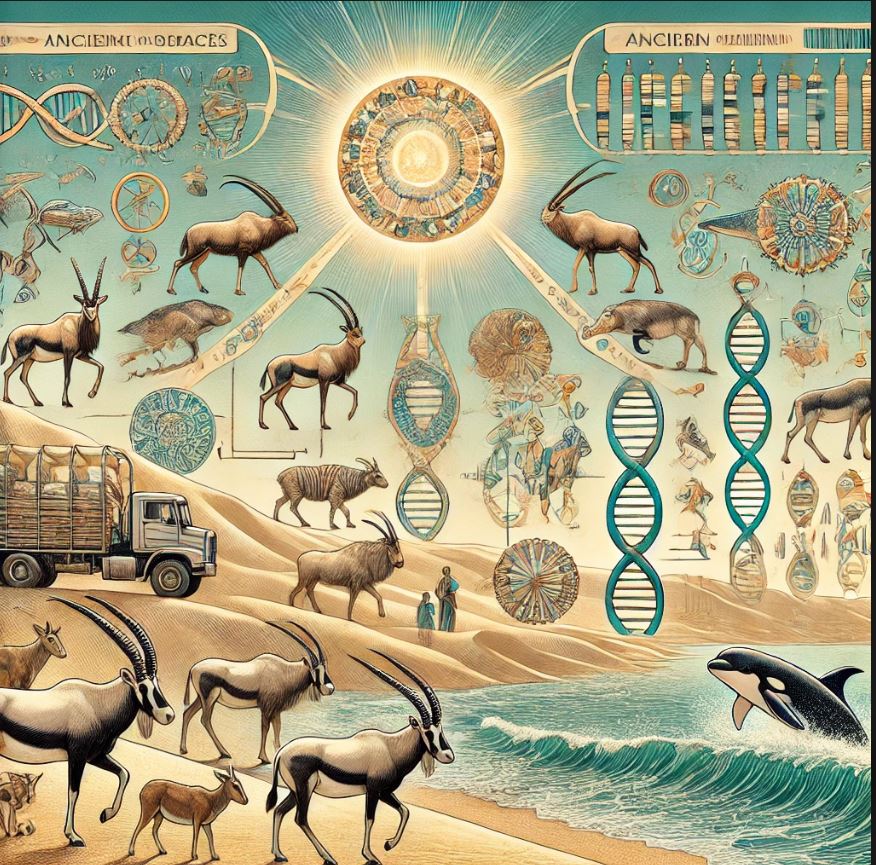
4. Historical migration of key wildlife in Qatar and their adaptation to extreme climate through the study of ancient and modern DNA.
Qatar, a nation characterized by its harsh desert climate and saline marine environments, has long been home to a unique array of wildlife species that have adapted to these extreme conditions. Understanding the historical migration patterns and subsequent genetic adaptations of these species is crucial for conserving biodiversity and ensuring ecosystem resilience in the face of ongoing climate change. Ancient DNA (aDNA) analysis, combined with the study of modern genomes, offers a powerful approach to uncovering the evolutionary processes that have enabled certain species to thrive in such challenging environments. This study aims to investigate the genetic mechanisms underlying the adaptation of key wildlife species in Qatar to extreme climatic conditions by comparing their ancient and modern genomes. Through comprehensive genome assembly, annotation, and functional analysis, the study will provide insights into how these species have evolved over time and adapted to the high temperatures and salinity of the region.
The primary aim of this study is to elucidate the genetic adaptations of key wildlife species in Qatar to extreme climatic conditions by comparing ancient and modern DNA. Specifically, the study seeks to identify the genetic factors that have enabled these species to survive and thrive in hot, saline environments and to compare these adaptations with those of the same species in colder, temperate climates. We will perform high-quality genome assembly and annotation for ancient and modern DNA samples of selected wildlife species in Qatar. Identify and annotate functional elements in the genomes, such as genes, regulatory regions, and non-coding RNAs, that are involved in adaptation to extreme climates. Compare the genomes of the same species from Qatar (hot, saline environment) with those from colder, temperate climates (non-saline environment) to identify genetic differences associated with environmental adaptation. Investigate the evolutionary processes, such as natural selection and genetic drift, that have shaped the genetic adaptations of these species to Qatar’s extreme climate. Reconstruct the historical migration routes of these species using aDNA and assess how these movements have influenced genetic diversity and adaptation.
This study will significantly enhance our understanding of the genetic basis of adaptation to extreme environments, particularly in the context of climate change. By uncovering the evolutionary history and genetic adaptations of key wildlife species in Qatar, the research will contribute to the conservation of biodiversity in the region and inform strategies for managing and protecting wildlife in other arid and saline environments. Additionally, the insights gained from comparing ancient and modern genomes will provide valuable information on how species may continue to adapt to changing climates in the future, offering a predictive framework for assessing the resilience of ecosystems globally.
5. Genetic and transcriptomics characterization of idiopathic calcium oxalate urolithiasis.
Idiopathic calcium oxalate urolithiasis (ICOU) is a common urinary tract disorder characterized by the formation of calcium oxalate stones in the urinary tract. Despite extensive research, the exact etiology and pathogenesis of ICOU remain poorly understood. This study aims to elucidate the genetic and transcriptomic underpinnings of ICOU, potentially leading to novel diagnostic and therapeutic strategies.
The aim is to characterize the genetic landscape of ICOU using whole-genome sequencing, analyze RNA sequencing data to identify differentially expressed genes in ICOU patients compared to controls, integrate genetic and transcriptomic data to identify gene-expression regulatory networks associated with ICOU and discover novel biomarkers for ICOU.
This study has the potential to significantly advance our understanding of the genetic and molecular mechanisms underlying ICOU. The findings may identify novel genetic risk factors for ICOU, leading to improved risk stratification and early intervention, discover new therapeutic targets for ICOU, paving the way for the development of more effective treatments, and provide valuable insights into the pathogenesis of ICOU, contributing to a better understanding of this common urinary tract disorder.


 Call for Master and Undergraduates Students: Join My Bioinformatics Research Group!